PhD Profile: Kaiyu Yu Talks Decision Support Tools for Newborn Brain Protection

By |2021-10-27T14:28:09+01:00October 27th, 2021|

An emerging expert in the field of biomedical engineering, Kaiyu Yu joined INFANT as a PhD researcher in July 2021 to begin working on an SFI Frontiers for the Future project that is developing decision support tools for newborn brain protection at INFANT.

The newborn brain is vulnerable to injury around the time of birth. Decision support systems based on artificial intelligence can turn data from devices that measure vital signals from the brain, heart and circulatory system into information that can help clinicians to treat critically ill infants.

However, these signals are complex and the interaction between them is not completely understood. This project will develop new mathematical and signal processing models that will facilitate the next generation of computer algorithms that will help doctors deliver specific and urgent medical interventions to improve the long-term health and quality of life for these infants.

The ambitious project will lean on Kaiyu’s expertise in developing machine learning algorithms and could help clinicians to monitor, predict and treat low blood pressure among pre-term infants before a serious issue may arise.

Clinicians want to be able to monitor a pre-term baby’s blood pressure. They do this by measuring some physiological signals, such as EEG, ECG and NIRS readings.

I want to be able to develop a system that collates, processes, segments and models EEG, ECG and NIRS data so that clinicians can accurately predict if a pre-term baby’s blood pressure is going to drop to a level that might require medical intervention.

As a master’s student, Kaiyu developed an Android app that collected human activity data while studying biomedical engineering at Dalian University of Technology in China.

Through his expertise in developing machine learning algorithms, Kaiyu could see synergies between his research and the work being undertaken by INFANT’s Dr Gordon Lightbody and Professor Liam Marnane.

After I heard Professor Marnane speak at Dalian University of Technology, I understood that there were synergies between the research that we were both involved in.

As part of my master’s thesis, I was using machine learning models to develop useful tools that could predict health outcomes, which was something that Professor Marnane and INFANT were also engaged with.

So, when I completed my master’s, I email Professor Marnane to see if I could work on a PhD project at INFANT.

Thankfully he said yes, and now I’m applying a lot of what I learned at Dalian in this new project.

Having started the PhD programme, Kaiyu is in the process of surveying data that will eventually help him to design a system that will result in better clinical outcomes for pre-term babies.

That desire drives his ambition to complete the programme so that he can work in the medical industry, where he can help enhance medical devices.
 

INFANT Led European Network to Advance Development of Algorithms that Detect Brain Injuries in Infants

By |2022-09-12T14:22:44+01:00October 27th, 2021|

INFANT’s Dr John O’Toole will lead a team of international researchers to accelerate the development of AI Technologies that detect brain injuries in infants.

Working alongside a team of scientists, clinicians and technical experts from 14 different European countries, Dr John O’Toole aims to build capacity and strengthen cooperation among international research groups, with the goal of developing algorithms that will minimise the risk of babies developing catastrophic life-long neonatal brain injuries.

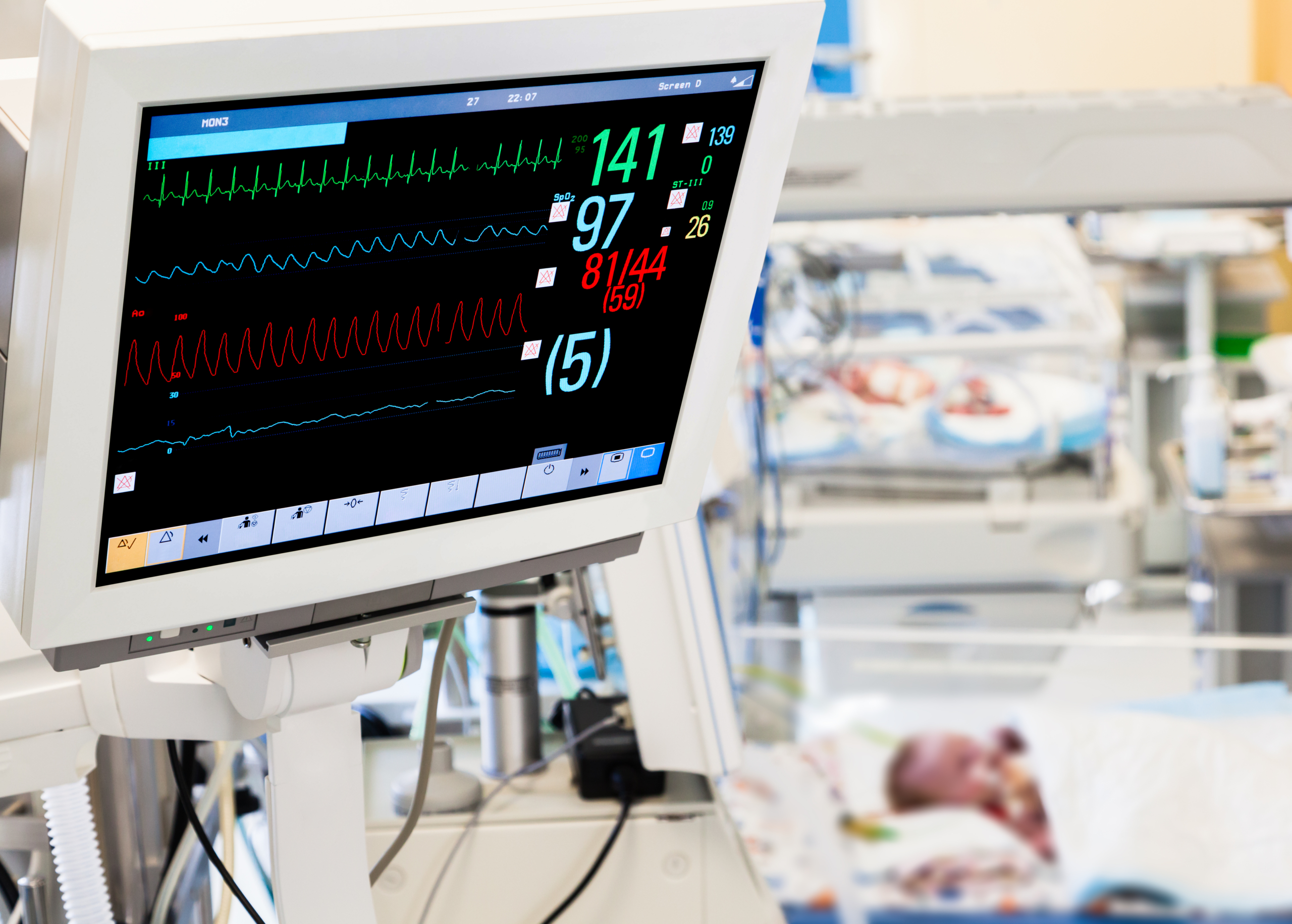
Insufficient oxygen around the time of birth can cause brain injury. For babies born prematurely, the heart and lungs may struggle to adapt to the new environment which can lead to brain injury too. Brain monitoring of a tiny infant in an intensive care unit is challenging.

It can be difficult and slow to interpret the complex brain-wave patterns.  AI systems are a perfect fit to this problem, as they can be designed to automatically recognise signs of brain injury.

Funded by the European Cooperation in Science and Technology, the researchers involved in the AI-4-NICU project plan to build on existing cot-side technologies, such as devices that measure brain waves, by including AI algorithms to detect markers of brain injury.

This, Dr O’Toole anticipates, will lead to the development of decision-support tools that will help clinicians in neonatal intensive care units to quickly identify potential brain injuries that can result in death, cerebral palsy, or delayed development.

Reading and interpreting the brain-wave signals is a notoriously difficult task which requires highly specialised expertise. AI systems can be designed to mimic the human expert, by shifting through enormous amounts of data to automatically find signs of brain injury.

These AI systems, unlike the human expert, can then run around the clock for all at-risk infants to provide a continuous assessment of brain health.

To develop the device, Dr O’Toole and his team will first develop the tools necessary to acquire, pool, share, and manage neuro-physiological data sets.

They will then create a framework to develop, test, and compare algorithms that they hope will act as decision-support tools in neonatal intensive care units.


Learn More about Newborn Cephalohematoma here (more…)

PhD Profile: Kimia Rezaei on Developing Algorithms to Measure Abnormal Biosignals

By |2021-10-22T09:31:25+01:00October 22nd, 2021|

One of five PhD students to begin their studies at INFANT this semester, Kimia Rezaei comes to University College Cork with a great deal of academic and industry experience.

After completing a Masters in electrical engineering at Islamic Azad University in Iran during 2014, Kimia sought out and secured a role with Sahand Parsian Gharb Communication Service Company, where she developed an advanced knowledge of mobile networks and Ericsson’s sophisticated equipment and software.

During that time, Kimia also enhanced her academic profile, publishing three articles in peer reviewed journals.

Focusing each of her publications on the segmentation and classification of brain tumour images using machine learning algorithms, Kimia developed a specialism in a field that naturally aligned with INFANT’s research strengths.

Working under the supervision of Professor Liam Marnane and Dr Gordon Lightbody, Kimia will be given the opportunity to enhance her knowledge and expertise as she seeks to develop an algorithm that will measure the symptoms that trigger abnormal biosignal readings among infants.

Kimia’s PhD project leans on her most recent publication, which demonstrated how radiologists can employ machine learning algorithms and computer-aided diagnosis systems to make more informed medical decisions.

If we can accurately predict abnormal EEG and ECG signals, we can begin to pre-emptively diagnose and treat infants.

To do this, my research aims to accurately measure things like brain activity and blood pressure so that we can collect data that will help us to create an algorithm that will allow clinicians to quickly diagnose, treat and cure children.

I hope that my research will help children to grow up healthy.

Kimia is in the early stages of her study after joining the INFANT team in September. Scheduled to complete the PhD programme in 2025, Kimia is driven by an ambition to work at the intersection between healthcare and technology after she graduates.

PhD Student Profile: Mary Anne Ryan, General Nurse, Paediatric Nurse and Mid-Wife

By |2021-10-14T10:52:28+01:00October 13th, 2021|

Introducing herself as a registered general nurse, paediatric nurse and a mid-wife, INFANT PhD researcher, Mary Anne Ryan, is fervent in her desire to protect brain development of pre-term babies who pass through the neonatal unit in CUMH.

Mary Anne describes how advances in technology have pushed back the limits of viability, reducing mortality associated with preterm birth. However there has been little change in morbidity amongst the preterm infant group.

A clinical researcher, Mary Anne has a specific interest in the importance of sleep to the developing brain, explaining that sleep is a prerequisite for normal growth and a precondition for the normal development of the infrastructure of the brain.

‘There is a reason why preterm babies may sleep for up to 90% of the day. Whilst it may appear to be physically passive and restful, a high level of brain activity is maintained, which is crucial to a preterm infants’ developing brain’.

‘While we monitor heart rate, respirations, temperature, how well the body is oxygenated and the nutritional intake of preterm infants in the neonatal unit, we do not routinely monitor brain activity’.

Brain activity may be monitored through electroencephalography (EEG). Sleep states (active sleep and quiet sleep) are associated with particular neural activity patterns which change with brain maturation.

‘Knowing what features and patterns are normal for gestational age we can determine if the brain development is on a normal trajectory of development’.

Mary Anne’s research focuses on moderate to late preterm infants (born between 32- and 36+6-weeks GA). A preterm group represent up to 85% of all preterm infants born and are largely underrepresented in the literature.

‘Normally, brain growth and development occur in the womb until term, a place of minimal sensory exposure’.

‘The high sensory environment of the neonatal unit may be home to preterm infants for many weeks with bright lights, high levels of noise, stressful painful procedures, all of which frequently interrupt sleep our natural neuroprotective state during a critical period of development’.

‘What I’m really asking is what does the sleep architecture of the moderate to late preterm infant at 36 weeks in the neonatal unit tell us about their future brain development?’

Mary Anne’s research required her to carry out overnight EEG’s on over 100 preterm infants at 36 weeks in the neonatal unit in CUMH and carry out follow up developmental assessments at four- and 18-months corrected age. Sleep/wake patterns during the preterm period have been found to be related to developmental outcomes. However longitudinal studies relating to sleep state organisation amongst this homogenous group of preterm infants are rare.

‘Secondly, I’m asking, how does brain development of this preterm infant group compare to healthy term born infants at the same gestational age?’

‘Traditionally healthy moderate to late preterm infants have minimal ongoing long-term surveillance’.

‘Whilst the majority of these infants do well a significantly higher percentage of adverse outcomes are evident in the literature in comparison to term born infants’.

Mary Anne’s research will also compare developmental outcome scores of the preterm infant group to a term born group recruited as part of another study.

Motivated by a desire to enhance the care that is already being delivered to pre-term babies, Mary Anne’s focus on the practical application of her research stems from her conviction that nurses bring a unique contribution to neurodevelopmental care.

As a clinical researcher, Mary Anne has a specific interest in the practical application of her research, which could lead to the adoption of new practices that create periods of protected sleep so as to improve the long-term neuro-developmental outcomes for pre-term babies.

INFANT Seminar Series: Dr Nahla Ahmed and Dr Antoine Giraud to Discuss Their Research

By |2021-10-13T09:20:07+01:00October 13th, 2021|

The INFANT seminar series will continue this Friday, October 15th 2021 at a slightly later time of 12.30 pm. For the coming weeks, we hope to welcome our new clinical fellows and PhD students and learn about some of their plans while here in INFANT.

First up are two new clinical fellows. Dr Nahla Ahmed, a paediatric registrar, will be discussing EEG in the hypotensive pre-term infant, and Dr Antoine Giraud, a visiting French clinical fellow will be discussing EEG changes in pre-term infants associated with peri-natal inflammation.

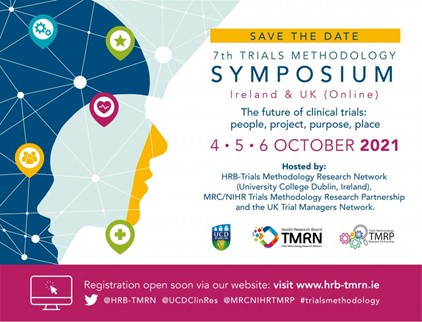
Dr. Eoghan McKernan Takes Part in 7th Annual Trials Methodology Symposium

By |2021-10-06T13:00:02+01:00October 6th, 2021|

Dr. Eoghan McKernan took part in the 7th Annual Trials Methodology Symposium, presenting an exciting Post-PhD career perspectives & viewpoints presentation, with an emphasis on Infrastructure Management.  Eoghan presented a case study on infrastructure management at INFANT.

This year’s theme is ‘’The Future of clinical trials: people, project, purpose, place’’

The prestigious event, which was hosted between 4-6  October, can be accessed online at www.hrb-tmrn.ie

The event is hosted by HRB-Trials Methodology Network (UCD), MRC/NIHR Trials Methodology Research Partnership and the UK Trial Managers Network.

The interactive event includes presentations from leading international speakers with dedicated Q&As, and live discussions. To find out more visit:

7th Annual Trials Methodology Symposium – HRB-TMRN

Go to Top