
Dr Elaine McCarthy’s Project to Screen for Iron Deficiency in Pregnant Women and Infants

By |2022-03-01T09:05:03+00:00February 28th, 2022|

INFANT’s Dr Elaine McCarthy is the lead investigator on the IDEA project, a study that aims to develop two screening tools to identify iron deficiency among pregnant women and preterm infants.

Funded by the Health Research Board (HRB), it is anticipated that the project will lead to the creation of screening tools that can be integrated into clinical practice and allow for the early detection of iron deficiency.

Titled Iron Deficiency Assessment for protection of the newborn brain, the project has the potential to identify a condition that is estimated to affect 2 billion people worldwide, according to Dr McCarthy.

In Europe, one in three pregnant women are iron deficient, with even higher rates of up to 85% iron deficiency seen in some countries.

Similarly, high rates of deficiency are widely reported in infants and young children, with evidence suggesting as many as one in two young children are iron depleted or deficient.

If left untreated, iron deficiency will progress into iron deficiency anaemia, which can result in adverse pregnancy outcomes such as preterm birth or the birth of a low-birth-weight infant.

We want to protect women and their children from iron deficiency by creating a tool that will identify the mothers and infants who are at the greatest risk so that they can receive early treatment.

By taking such a preventive approach, Dr McCarthy, a Lecturer in the School of Food and Nutritional Sciences, believes that the IDEA project can lead to improved health and wellbeing outcomes and result in the overall enhancement of educational attainment, job potential and quality of life.

Dr McCarthy’s assertion is based on the fact that iron plays an essential role in brain development, with iron deficiency labelled as one of the leading causes of diminished neurological developmental potential worldwide.

From our earlier research, we know that women’s health and nutritional status both prior to and during pregnancy are critical to the health and development of their child.

Iron deficiency in the prenatal and early postnatal periods can have catastrophic consequences for both mother and infant, including long-lasting, irreversible deficits in cognition, motor function and behaviour.

Therefore, prevention and early detection are critical to protect the developing brain. Unfortunately, we currently don’t have a suitable screening system to enable this early detection of the most vulnerable.

As part of the initial phase of the project, Dr McCarthy and her team are inviting all pregnant women, aged over 18 years, living in Ireland to take part in a 20-minute online survey that seeks to evaluate nutrition knowledge, attitudes and practices.

Once the survey phase of the project is complete, Dr McCarthy will begin assessing the data before beginning the process of developing a set of predictive indicators that can identify iron deficiency in pregnant women and their infants. Field testing will then follow this phase to validate the operability of the screening tools in clinical practice.
INFANT Designed Brain Injury Detection Device Secures Enterprise Ireland funding

By |2022-02-23T12:23:35+00:00February 23rd, 2022|

A research team led by University College Cork’s (UCC) Dr Mark O’Sullivan in the INFANT Research Centre has been awarded funding by Enterprise Ireland to commercialise a medical device that could transform how clinicians are able to detect newborn brain injuries.

Presently, brain injuries in newborns account for 23% of all infant deaths and over one million cases of permanent disability each year. Seizures are often the most common diagnostic indication of brain injury. However, accurate diagnosis requires complex equipment and expertise which is not readily available.

The pocket-sized device, which is being developed by the Neurobell team at UCC’s INFANT Research Centre, will allow clinicians to rapidly diagnose potential brain injuries in newborns without requiring the specialised medical expertise needed to configure and manage complex EEG machines.

Dr O’Sullivan, a lead investigator with INFANT, believes that the novel device could potentially be deployed across all hospital settings, ensuring that clinicians could make rapid decisions using its AI-based decision support.

Although EEG is the gold standard for neurological monitoring, they are large complex machines that require specialised personnel to configure the equipment and interpret the hours of resulting EEG information.

This often restricts the use of EEG monitoring to tertiary hospitals, and even in such locations, the expertise is not readily available for EEG to be used routinely without significant delays.

We are building a portable and wireless device that can both record the EEG and provide AI-based detection of seizures.

This will provide clinicians with real time alerts and data, allowing them to quickly diagnose and treat potential brain injuries.

Currently at the prototype stage, the Enterprise Ireland Commercialisation Fund, which is co-funded by the European Regional Development Fund (ERDF), will allow the Neurobell project team to execute on their plans to finalise the design of the medical device this year and to complete a clinical investigation in 2023. The 2 years of funding will be used to hire key engineering, clinical, and commercial personnel and to engage with industry partners. Following the Enterprise Ireland Commercialisation funding, the team plan to establish a spin-out company to bring their novel technology to market.

The device builds on the AI-based research, recently recognised at the AI Awards Ireland, conducted at the INFANT Research Centre and combines multi-disciplinary expertise across medicine, computer science, and engineering.

Once complete, the device could result in positive health outcomes for a significant number of babies born in hospitals that don’t have access to EEG machines and expertise.

The cot side technology that we’re building is designed to allow for the neurological monitoring of newborns, across all hospital settings, helping those in need to be diagnosed and treated in a timely manner.

By developing a portable monitor with on-board decision support, we’re aiming to increase the number of hospitals capable of providing EEG monitoring for high-risk newborns.

The Enterprise Ireland funding underscores INFANT’s ambition to constantly strive and innovate in maternal and child healthcare, an area where there is huge potential and great clinical need according to INFANT Director, Prof Geraldine Boylan.

This technology will be disruptive and provide access for many more hospitals to brain monitoring, without the need for expert training or costly equipment. The potential for translation to low resource settings, where the burden of brain injury is highest is ground-breaking.

Since the inception of the Neurobell project, Dr. O’Sullivan has been supported by UCC Innovation through the GatewayUCC Sprint Accelerator programme and the IGNITE Business Innovation Centre.

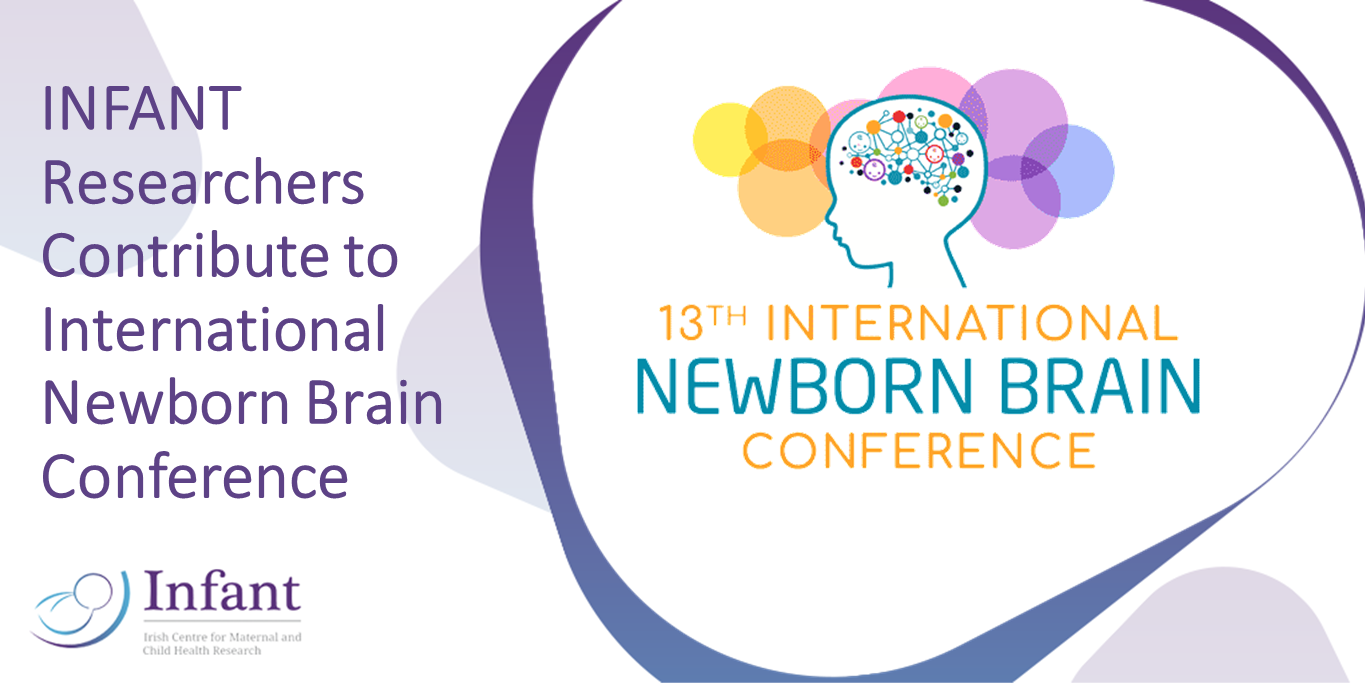
INFANT Researchers Contribute to International Newborn Brain Conference

By |2022-02-15T09:50:35+00:00February 15th, 2022|

Professor Geraldine Boylan and Professor Deirdre Murray, alongside Ph.D candidates Minoo Ashoori and Dr Aisling Garvey, presented INFANT’s cutting edge research in areas such as neonatal sleep and neonatal encephalopathy at the International Newborn Brain Conference.

The annual International Newborn Brain Conference sees a host of acclaimed researchers from leading North American and European institutions explore new ways of understanding, monitoring, protecting and treating the newborn brain.

Now in its 13th year, the conference provides continuing medical education to multidisciplinary professionals working to improve the neurological and developmental health outcomes of premature and high-risk newborns.

The prestigious conference took place between February 9-12 and saw both Professor Boylan and Professor Murray included among the list of globally renowned invited speakers.

Both Professor Boylan and Professor Murray were also members of the organising committee for the conference, they moderated panels and presentations, took part in debates and presented papers at what was a hugely engaging and incredibly successful conference.

Learn more about the International Newborn Brain Conference.

INFANT Seminar Series: Dr Kirsten Dowling to Discuss Predictive Biomarkers for Autism Spectrum Disorder: A Metabolomics Profiling Study in the Cork BASELINE Birth Cohort

By |2022-02-09T15:45:36+00:00February 9th, 2022|

Autism Spectrum Disorder (ASD) is a neurological, developmental disorder that affects communication and behaviour. Currently, there is a lack of understanding about the aetiology of ASD and children are not diagnosed reliably until they are at least 3 to 4 years of age. Henceforth, there is an urgent need for the identification of diagnostic biomarkers for the prediction of ASD. 

Metabolomic profiling was undertaken on cord blood plasma from ASD cases vs gender matched controls from the Cork BASELINE Birth Cohort using Liquid chromatography-tandem mass spectrometry.

Clinical data (maternal and child BMI, birth weight, gestational age, health and lifestyle etc.) were combined with metabolite peaks to explore machine learning (ML) algorithms: t-test, partial least squares-determinant analysis (PLS-DA) and random forest (RF).

We profiled 2612 compounds and 18 clinical variables to identify the top predictive metabolite and clinical features for the development of ASD.  RF feature selection resulted in the highest performing 20 metabolite subset, and pathway analysis revealed significant alterations in 5 metabolic pathways.

Dr Kirsten Dowling will deliver her presentation on Friday, February 11 at 12 pm.

INFANT PhD Profile: Dr Emily O’Connor’s Work to Standardise The Way Reviews of Perinatal Deaths Occur

By |2022-02-09T14:42:18+00:00February 9th, 2022|

Dr Emily O’Connor is pursuing a PhD in the area of perinatal medicine with INFANT and NPEC at UCC. Her background includes previous work as a Specialist Registrar in obstetrics and gynaecology with the Royal College of Physicians in Ireland (RCPI).  

Emily is extremely passionate about improving our maternity and perinatal services as well as improving the experience of parents who use those services.  

Emily’s planned thesis is titled: Structured Evaluation and Implementation of a National Perinatal Mortality Review Tool for Ireland.  Her research is funded by Féileacáin, the Stillbirth and Neonatal Death Association of Ireland.  

Perinatal deaths encompass babies who die before they are born (stillbirth), during labour or delivery (intrapartum death) or after birth (neonatal death). The Irish perinatal mortality rate has remained stable over the last ten years but has not decreased over this period.  

Emily’s work aims to standardise the way reviews of perinatal deaths occur by developing and implementing a national perinatal mortality audit tool for all perinatal deaths occurring in every maternity unit across Ireland.   

A major focus of this work is the involvement of bereaved parents in the review process. The aim of this research is to offer a more inclusive, transparent process for parents who have experienced the loss of their baby.  

Emily is conducting this research with the Pregnancy Loss Research Group based at INFANT and the NPEC. Her supervisors are Professor Keelin O’Donoghue (INFANT), Professor Richard Greene (NPEC) and Dr Sara Leitao (NPEC).  


Go to Top