Cognitive impairment in preterm infants can be predicted at discharge, INFANT research shows

By |2024-01-12T08:44:10+00:00January 11th, 2024|

  • Researchers develop new prediction tool to identify cognitive impairment

Impaired cognition among preterm infants can be predicted prior to discharge from neonatal care, new joint Irish and Swedish research shows.

Each year, 2.2 million infants are born very preterm (VPT), that is, at a gestational age (GA) younger than 32 weeks. Children born very preterm are at risk of cognitive delay which can predict later learning difficulties at school age. It is currently difficult to predict at the individual level which children are most at risk, and which children would benefit most from preventative interventions. Many of the current interventions are highly resource intensive—commencing in the hospital, followed by frequent visits to the families in their homes.

Researchers from the Irish Centre for Maternal and Child Health Research(INFANT) at University College Cork, Ireland and Karolinska Institutet, Sweden examined data from the Swedish Neonatal Quality Registry and used machine learning (AI) to identify the most important risk factors for delayed cognitive development. The data from 1062 very preterm babies, all of whom had been carefully assessed at the age of 2 years, was examined to help develop a predictive model.

Through this study the research team have developed a predictive model, containing 26 risk factors, which at discharge from the neonatal unit identified 93% of surviving VPT infants who would later screen positive for cognitive difficulties at 24 months.

The study also found that in addition to known risk factors such as low birth weight, male gender and neonatal cerebral hemorrhage, prolonged ventilator treatment and lack of breastfeeding at discharge from neonatal care were identified as important risk factors for delayed cognitive development 2 years after discharge.

Mikael Norman, Professor of Pediatrics at the Department of Clinical Science, Intervention and Technology, Karolinska Institutet, Stockholm, Sweden and lead researcher of the study said “This is an important step towards tailoring preventative interventions to the most needy children already upon discharge from neonatal intensive care. There is effective help available today, but it is often very resource-intensive and therefore may not be available to everyone. Therefore, new prediction tools like the one we developed are needed.”

Professor Deirdre Murray, Chair in Early Brain Injury and Cerebral Palsy, Consultant Paediatrician and Paediatric Research Lead at INFANT Research Centre commented on the findings “This is an exciting collaboration which combined the machine learning expertise of the INFANT centre and the world-leading perinatal databases of our Swedish collaborators. We need to improve our ability to predict those pre-term children who are highest risk of learning difficulties down the line. Improved early prediction will ensure that they have targeted follow up and will help us to find effective early interventions.”

Dr Bowe, corresponding author and INFANT, Irish Clinical Academic Training Programme (ICAT) funded PhD student said “Babies born very preterm are at risk of later cognitive difficulties. Early intervention can help but it is currently difficult to predict at an individual level which babies need this most. This study used routinely collected information from pregnancy, birth, and early life to identify which babies are most in need of early intervention.”

The study was based on the follow-up program set up by the Swedish Neonatal Association for very preterm babies, and on reporting to the Swedish Neonatal Quality register for neonatal care (www.snq.se). The data analysis was done in collaboration with Professor Deirdre Murray, Dr Andrea Bowe and Prof Gordon Lightbody at the INFANT Research Centre, University College Cork, Cork, Ireland, and Prof Anthony Staines in Dublin City University, Ireland.

The study was mainly financed by Region Stockholm and Karolinska Institutet (ALF 2020-0443) and the Childhood Foundation of the Swedish Order of Freemasons in Stockholm. Mikael Norman has acted as medical advisor for the Swedish Patient Insurance, received lecturer fees from Chiesi Pharma, and royalties from Studentlitteratur AB. Dr Andrea Bowe is funded by the Irish Health Research Board and Wellcome Trust co-funded Irish Clinical Academic Training Programme (ICAT) (Grant Number 203930/B/16/Z)

Publication: Prediction of 2-Year Cognitive Outcomes in Very Preterm Infants Using Machine Learning Methods | Pediatrics | JAMA Network Open | JAMA Network

Link to press:

UCC spins out new medtech start-up, NeuroBell

By |2024-01-08T10:06:49+00:00January 8th, 2024|

  • NeuroBell has developed an AI-powered medical device to accurately detect seizures in newborns, which can reduce the risk of long-term brain injury.
  • Seizures are the most common sign of brain injury, signalling the need for urgent treatment that can prevent further seizures and improve outcomes.
  • The start-up has secured an investment of €2.1m to fund product development, clinical trials, and the creation of new jobs.

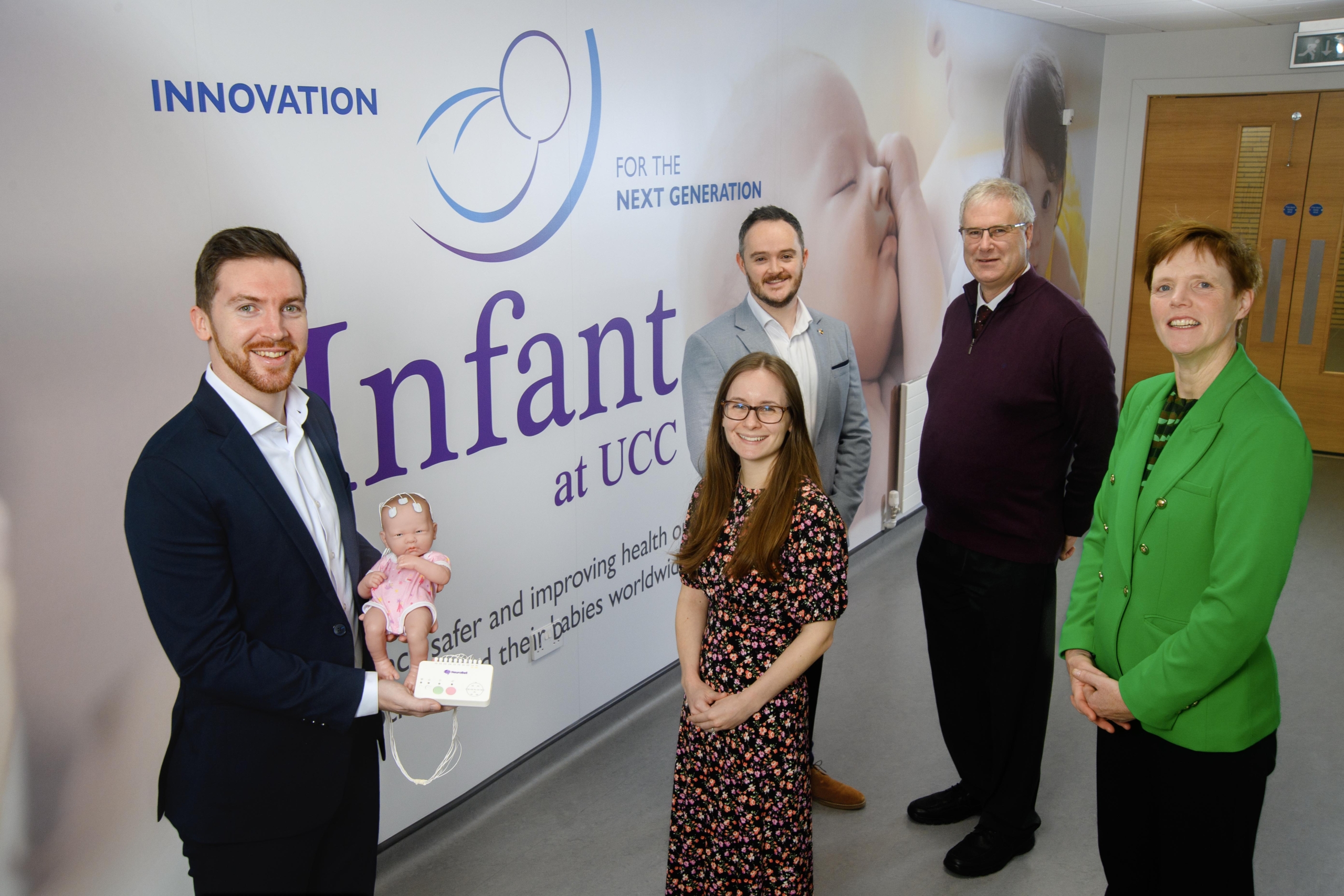
8 January 2024: University College Cork has announced the spin-out of NeuroBell, a Cork-based medtech start-up, as NeuroBell closes a €2.1M investment led by Furthr VC, Atlantic Bridge and HBAN MedTech Syndicate, with Enterprise Ireland and other private investors also investing in the round.

The funding will enable NeuroBell to launch its ground-breaking technology for real-time and accurate detection of seizures in newborns needing additional care, enabling early intervention that can improve outcomes. To support its mission, NeuroBell will create 12 new jobs by 2025.

Founded by Dr Mark O’Sullivan, Dr Alison O’Shea and Colm Murphy, and a spin-out from University College Cork and the Irish Centre for Maternal and Child Health Research (INFANT), NeuroBell aims to address a critical gap in the availability and accuracy of current technologies used to detect seizures in newborns admitted to the neonatal intensive care unit (NICU). Early detection of seizures is crucial for enabling early interventions in infants with brain injury and may help reduce the impact of life-changing conditions such as epilepsy and cerebral palsy.

Currently, continuous electroencephalography (EEG) monitoring is used to monitor newborn brain activity, however, these devices are cumbersome, have limited availability and require specialised training to operate and interpret results. A lack of expertise in this area leads to overlooked and untreated seizures.

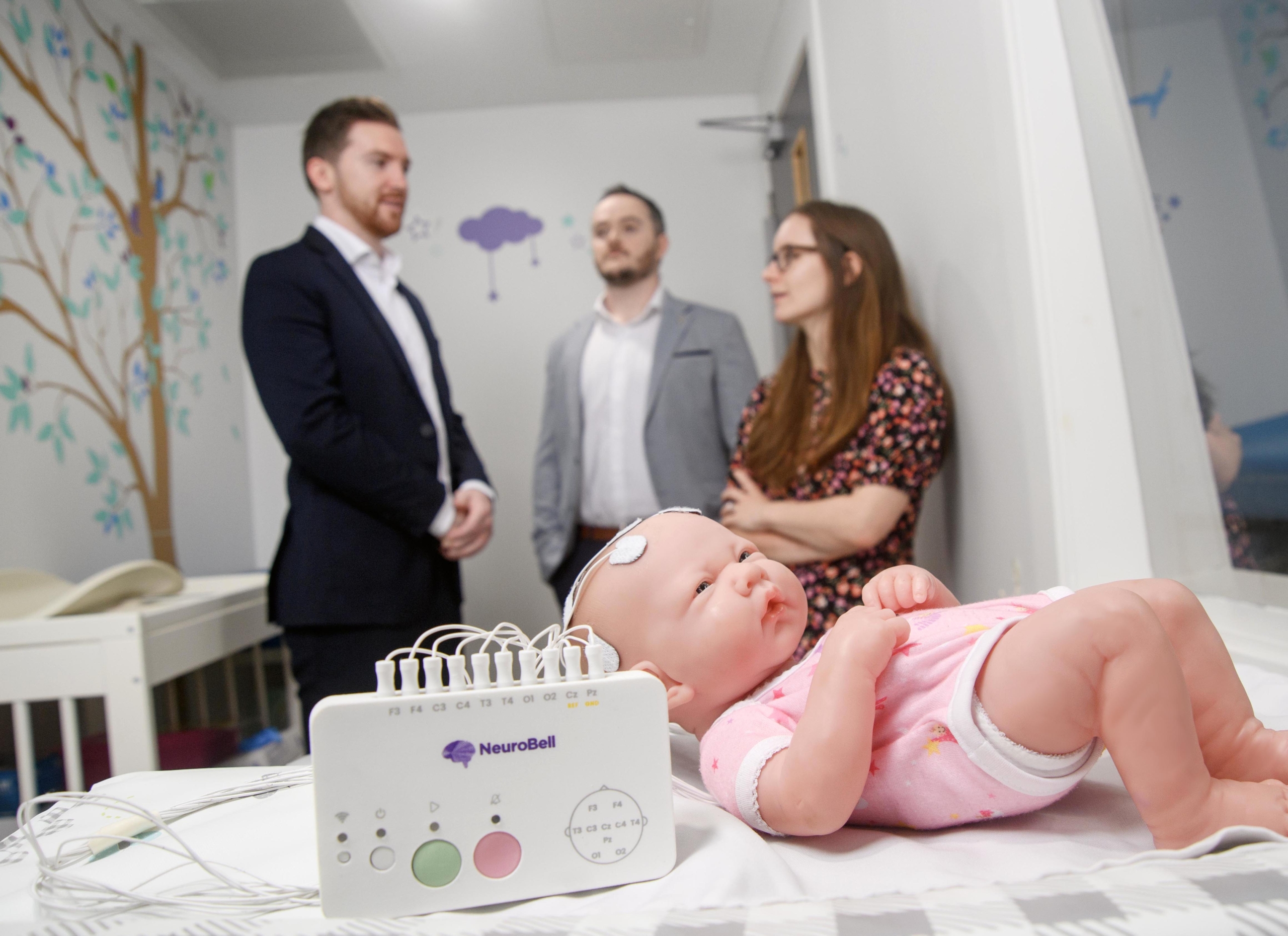
Using embedded edge-AI, NeuroBell has developed an easy-to-use, pocket-sized wireless brain monitor which can detect seizures in NICU patients. The technology enables routine monitoring of babies across various hospital settings without the need for specialised expertise. The user-friendly system eliminates the need for extensive training in both configuration and result interpretation.

Supported by the Enterprise Ireland Commercialisation Fund, NeuroBell is now focused on securing FDA approval before launching its device in the US market in 2024, followed by the European market. The funding will enable NeuroBell to develop its product further, carry out additional clinical trials and expand its team. The new roles will be in engineering, quality assurance, and business development. The company expects to begin commercial sales of its medical device in 2025.

NeuroBell estimates that approximately two million newborns worldwide suffer from brain injuries at birth. The company expects its device to have a significant impact on the health outcomes of babies who are receiving additional medical care following a traumatic birth. It could also have a considerable impact on financial burden of claims against the state. In Ireland, catastrophic birth injuries account for the single most costly category of claims for the HSE.1

Dr Mark O’Sullivan Co-founder & CEO, NeuroBell, said: “This funding marks a significant leap forward in advancing our goal to launch the product and get it into the hands of clinicians around the world to help newborn patients. It speaks volumes about our incredible team, who are passionate about using novel technologies to solve this critical medical need. Our solution will improve newborn care, offering gold standard brain monitoring with automated decision support to patients in all settings, including regional and tertiary hospitals.”

Richard Watson, Managing Partner, Furthr VC, said: We are very excited to be backing NeuroBell as they set out on bringing a truly transformative and ground-breaking neonatal monitoring device to market, which will impact the survival and long-term neurological outcomes of tens of thousands of babies in critical care. We are highly impressed by the founding team and what they have achieved to date in UCC prior to spinning out. They have a very clear regulatory, clinical and commercial plan for launching the product, and I’m really look forward to working closely with them on this journey.”

Conor O’Sullivan, Investment Director, Atlantic Bridge University Fund, said: Having worked closely with NeuroBell’s management team, Enterprise Ireland and UCC Innovation during the company’s Commercialisation Fund we have seen the significant technical and commercial progress made by Mark, Alison and Colm. Atlantic Bridge invests in ambitious founders developing deep technology that has the potential to provide solutions to complex problems. We look forward to continuing to work closely with the NeuroBell team over the coming years and leveraging our global platform and network to support the company.” 

Dr Sally Cudmore, Director, UCC Innovation, said: “NeuroBell is a great example of UCC’s ambition to nurture entrepreneurial talent, with Dr O’Sullivan having participated in multiple business support programmes hosted by UCC Innovation including the SPRINT Accelerator and IGNITE start-up incubation programmes. The significant investment that the team has secured is testament to a strong leadership team and innovative technology. As a Limited Partner in the University Fund II managed by Atlantic Bridge, UCC is delighted to see that fund invest in NeuroBell and their mission to develop technology that will have a significant impact on newborns’ brain health.”

Professor Geraldine Boylan, INFANT Director, said: We are extremely proud of the achievements of the NeuroBell team and congratulate them warmly on this exciting milestone and significant investment. As the INFANT Centre turns 10 years old, NeuroBell clearly demonstrates how years of multi-disciplinary research combining engineering, neuroscience and neonatology can be translated into innovative devices to help identify newborn babies at risk of seizures.”

Photographs: Daragh Mc Sweeney/Provision

UCC medtech NeuroBell announces spin-out with €2.1m funding round – The Irish Times

Go to Top